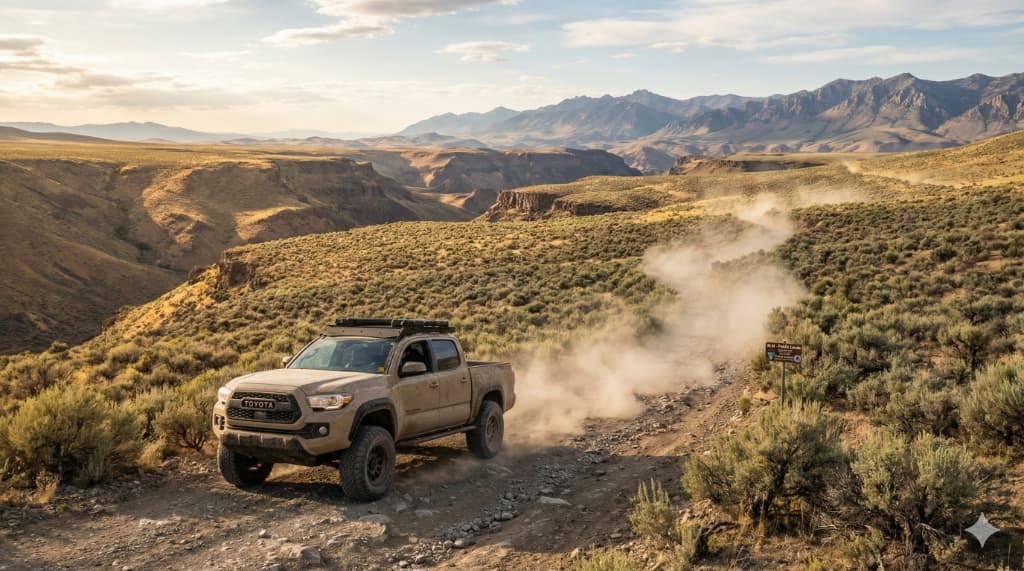
32 Million Acres of
Public Land.
Navigate Idaho's vast network of BLM roads, forest service routes, and backcountry trails. Find dispersed camping spots, plan overland routes, and explore the wildest corners of the Gem State.
Quick Start
Interactive Trail Map
Layer BLM land, National Forest boundaries, and known routes. Plan your backcountry adventure with terrain data.
Shooting Areas
Explore shooting-area records and agency guidance. Confirm current permission, fire restrictions, and a safe location with the land manager.
Plan With Roam Idaho
Overlanding Gear
Recovery, navigation, sleep system, and the rest of the kit that turns a 4WD into a basecamp.
Public Land Guide
BLM vs Forest vs State endowment lands — what you can drive on and where to verify it.
Idaho GMU Map
Plan dual-purpose trips by overlaying hunting unit boundaries with offroad routes.
Browse by Region
Featured Adventure Trails
View AllDanskin Mountains OHV Area
Extensive OHV trail system featuring sandy washes, rocky climbs, and technical single-track. One of Southwest Idaho's most popular riding areas with trails for all skill levels. Mix of BLM and state land.
Magruder Corridor
The legendary Magruder Road connecting Idaho and Montana through the Frank Church-River of No Return Wilderness. A true adventure route requiring 4x4, no services, and remote wilderness conditions. One of the most scenic and challenging routes in the West.
Silver City Road
Scenic mountain road to one of Idaho's best-preserved ghost towns. Silver City sits at 6,200 feet with over 70 historic buildings. Road is rough but typically passable for high-clearance 2WD in good conditions.
Salmon River Road
Paved and gravel route following the Salmon River from Riggins to Stanley. One of the most scenic drives in America with access to countless side trails and forest roads. The River of No Return.
Vehicle Classifications
These planning labels describe vehicle considerations, not legal access or a guarantee that a route is passable. Check the official travel map’s vehicle class, width, and seasonal restrictions.
Highway Legal
Any street-legal vehicle. Paved and maintained gravel roads.
Highway 21, Ponderosa Pine Scenic Byway
High Clearance
Extra clearance may be needed for ruts, rocks, and uneven surfaces.
Check route-specific conditions
4x4 Required
Four-wheel drive essential. Rocky, steep, or washed-out sections.
Check the route guide and agency advice
OHV Width Limits
Allowed vehicles depend on the route’s width and vehicle-class designation.
Designated trail systems
Backcountry Safety
- • Tell someone your plans. Cell service may be unavailable along your route.
- • Carry recovery gear. Traction boards, straps, shovel, and a full-size spare at minimum.
- • Bring extra fuel and water. Gas stations may be 100+ miles apart.
- • Check conditions. Roads can be impassable due to snow, washouts, or fire closures.
- • Carry paper maps. GPS and cell service are unreliable in remote areas.
Frequently Asked Questions
Check the Idaho BLM camping guide, Forest Service MVUM guidance, and the current local order. Our camping guide explains the differences by land manager.
Can I camp anywhere on BLM land in Idaho?
No. Camping depends on local restrictions and legal access. Idaho BLM’s published guide describes a 14-day-in-28 stay limit, a 25-mile move, and at least 200 feet from water for dispersed camping. Check current field-office orders and posted signs before choosing a site.
Do I need a permit for dispersed camping in National Forests?
Requirements differ by forest and location. Check the ranger district for permits, stay limits, designated-site rules, and closures. Do not apply one forest’s rules statewide. Wilderness permits do not authorize motorized access into designated wilderness.
What is an MVUM and why does it matter?
The Motor Vehicle Use Map (MVUM) is the official map showing which roads and trails are open to motorized vehicles on National Forest land. Travel is only allowed on designated routes shown on the MVUM. Using unauthorized routes is illegal and subject to fines.
Can I drive on BLM land anywhere I want?
No. Use the BLM field office’s current travel-management map and orders to confirm which routes allow your vehicle. A public-land color or visible track does not establish permission, and temporary closures may apply.
What should I bring for backcountry travel in Idaho?
Essential items include: full-size spare tire, recovery gear (traction boards, straps, shovel), extra fuel, water (1 gallon per person per day minimum), paper maps/GPS, first aid kit, fire extinguisher, and communication device (cell service is often unavailable).
When are forest roads open in Idaho?
There is no statewide opening date. Snow, mud, washouts, seasonal restrictions, and temporary closures affect individual roads. Check the current travel map and the managing agency’s road and closure notices; a listed route is not a live condition report.
Plan Your Route.
Open the interactive map to layer BLM land, forest boundaries, and terrain data. Find your perfect backcountry escape.
Launch Trail FinderIncluded with Roam Pro — $3/month, 7-day free trial.