Public Land
Access Guide.
Last reviewed: May 2026
Idaho is over 60% public land, but rules vary drastically between agencies. Knowing the difference between BLM, Forest Service, and State Endowment Land is critical for legal hunting and camping.
Bureau of Land Management (BLM)
Yellow on Map
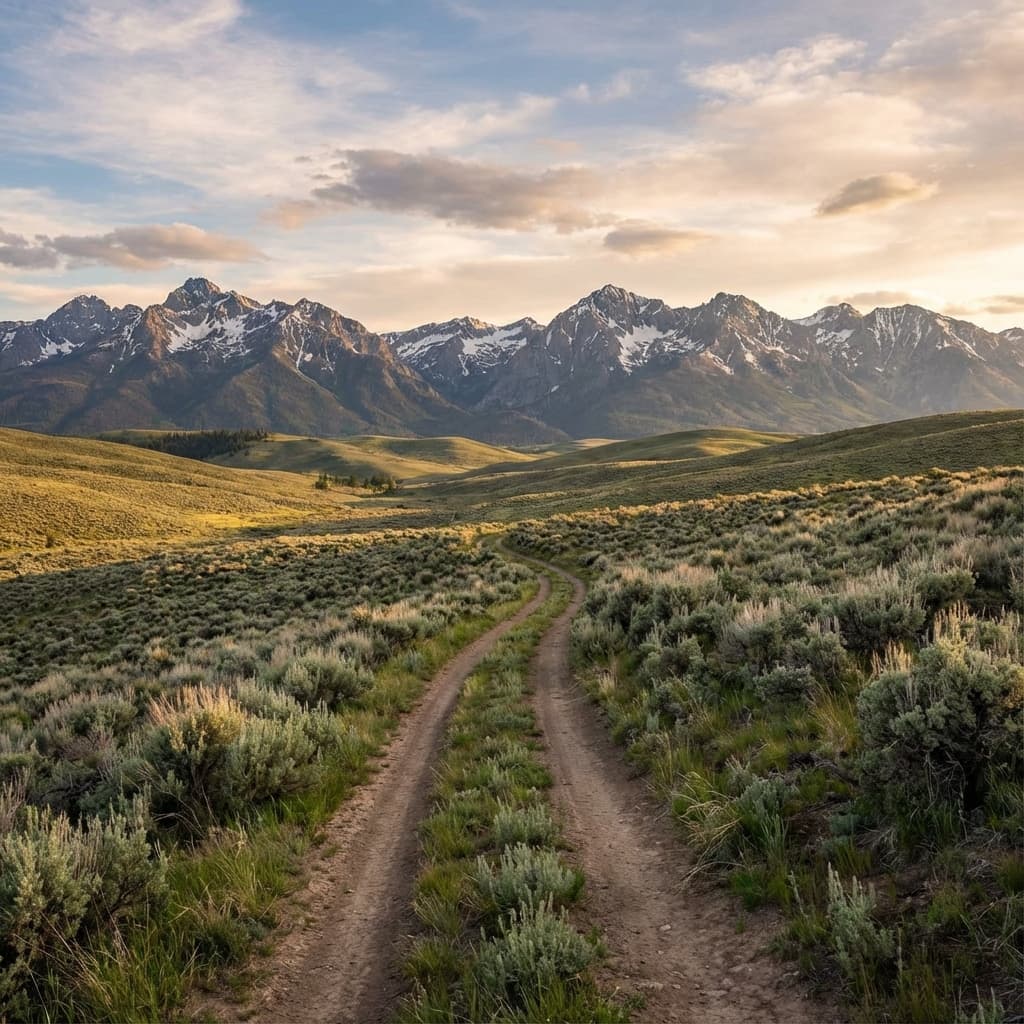
Managed for multiple use, BLM land is typically lower elevation sagebrush steppe. It offers the most flexible access for dispersed camping and backcountry utility.
BLM rules vary by field office and location. Check current closures, posted restrictions, designated-route maps, and local camping limits before traveling.
See BLM land on the interactive mapNational Forest (USFS)
Green on Map
High-elevation timbered areas managed by the USDA. Access is widespread, but motorized travel plans (MVUM) are strictly enforced to protect watershed and habitat.
State Endowment Land
Blue on Map
Critical Distinction: These lands are constitutionally mandated to generate revenue for schools. They are NOT "public" in the same way federal lands are.
IDL policy recognizes dispersed camping on endowment lands, subject to its conditions and area-specific closures. Check the current IDL map and posted rules for the parcel before camping.
Check IDL endowment-land camping guidanceSee State Endowment land on the interactive mapThe "Corner Crossing" Warning
In the West, millions of acres are "landlocked" in a checkerboard pattern. Corner Crossing (stepping from one public parcel to another over a shared corner with private land) is currently a legally grey area in Idaho.
While recent Wyoming court rulings favored corner crossing, Idaho law has not explicitly validated it. Many sheriffs still cite for trespass. Proceed with extreme caution.